

Our Services
Take steps to protect yourself

What is hemodialysis?
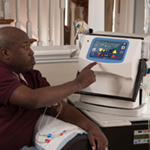
With hemodialysis, a machine removes blood from your body, filters it through a dialyzer (artificial kidney) and returns the cleaned blood to your body. This 3- to 5-hour process may take place in a hospital or a dialysis center three times a week.
You can also do hemodialysis at home. You may need at-home treatments four to seven times per week for fewer hours each session. You may choose to do home hemodialysis at night while you sleep.
What happens before hemodialysis?
Before you start hemodialysis, you’ll undergo a minor surgical procedure to make it easier to access the bloodstream. You may have:
- Arteriovenous fistula (AV fistula): A surgeon connects an artery and vein in your arm.
- Arteriovenous graft (AV graft): If the artery and vein are too short to connect, your surgeon will use a graft (soft, hollow tube) to connect the artery and vein.
AV fistulas and grafts enlarge the connected artery and vein, which makes dialysis access easier. They also help blood flow in and out of your body faster.
If dialysis needs to happen quickly, your provider may place a catheter (thin tube) into a vein in your neck, chest or leg for temporary access.
Your provider will teach you how to prevent infections in your fistula or graft. This provider will also show you how to do hemodialysis at home if you choose to do so.
What happens during hemodialysis?
During hemodialysis, the dialysis machine:
- Removes blood from a needle in your arm.
- Circulates the blood through the dialyzer filter, which moves waste into a dialysis solution. This cleansing liquid contains water, salt and other additives.
- Returns filtered blood to your body through a different needle in your arm.
- Monitors your blood pressure to adjust how fast blood flows in and out of your body.
What happens after hemodialysis?
Some people experience low blood pressure during or immediately after hemodialysis. You may feel nauseous, dizzy or faint.
Other side effects of hemodialysis include:
- Chest pain or back pain.
- Headaches.
- Itchy skin.
- Muscle cramps.
- Restless legs syndrome.
What is peritoneal dialysis?
With peritoneal dialysis, tiny blood vessels inside the abdominal lining (peritoneum) filter blood through the aid of a dialysis solution. This solution is a type of cleansing liquid that contains water, salt, and other additives.
Peritoneal dialysis takes place at home. There are two ways to do this treatment:
- Automated peritoneal dialysis uses a machine called a cycler.
- Continuous ambulatory peritoneal dialysis (CAPD) takes place manually.
What happens before peritoneal dialysis?
About three weeks before you start peritoneal dialysis, you’ll have a minor surgical procedure. A surgeon inserts a soft, thin tube (catheter) through your belly and into the peritoneum. This catheter stays in place permanently.
A healthcare provider will teach you how to perform peritoneal dialysis at home and prevent infections at the catheter site.
What happens during peritoneal dialysis?
During peritoneal dialysis, you:
- Connect the catheter to one branch of a Y-shaped tube. This tube connects to a bag that has a dialysis solution. The solution flows through the tube and catheter into the peritoneal cavity.
- Disconnect the tube and catheter after about 10 minutes, when the bag is empty.
- Cap off the catheter.
- Go about your usual activities while the dialysis solution inside the peritoneal cavity absorbs waste and extra fluids from the body. This process can take 60 to 90 minutes.
- Remove the cap from the catheter and use the other branch of the Y-shaped tube to drain the fluid into a clean, empty bag.
- Repeat these steps up to four times a day. You sleep with the solution in your stomach all night.
Some people prefer to do peritoneal dialysis at night. With automated peritoneal dialysis, a machine called a cycler pumps the fluid in and out of the body while you sleep.
What happens after peritoneal dialysis?
The liquid in your belly can make you feel bloated or full. It might feel uncomfortable, but the treatment isn’t painful. Your stomach may stick out more than usual when it’s filled with fluid.